





6th grade
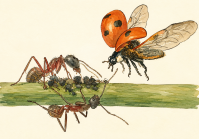
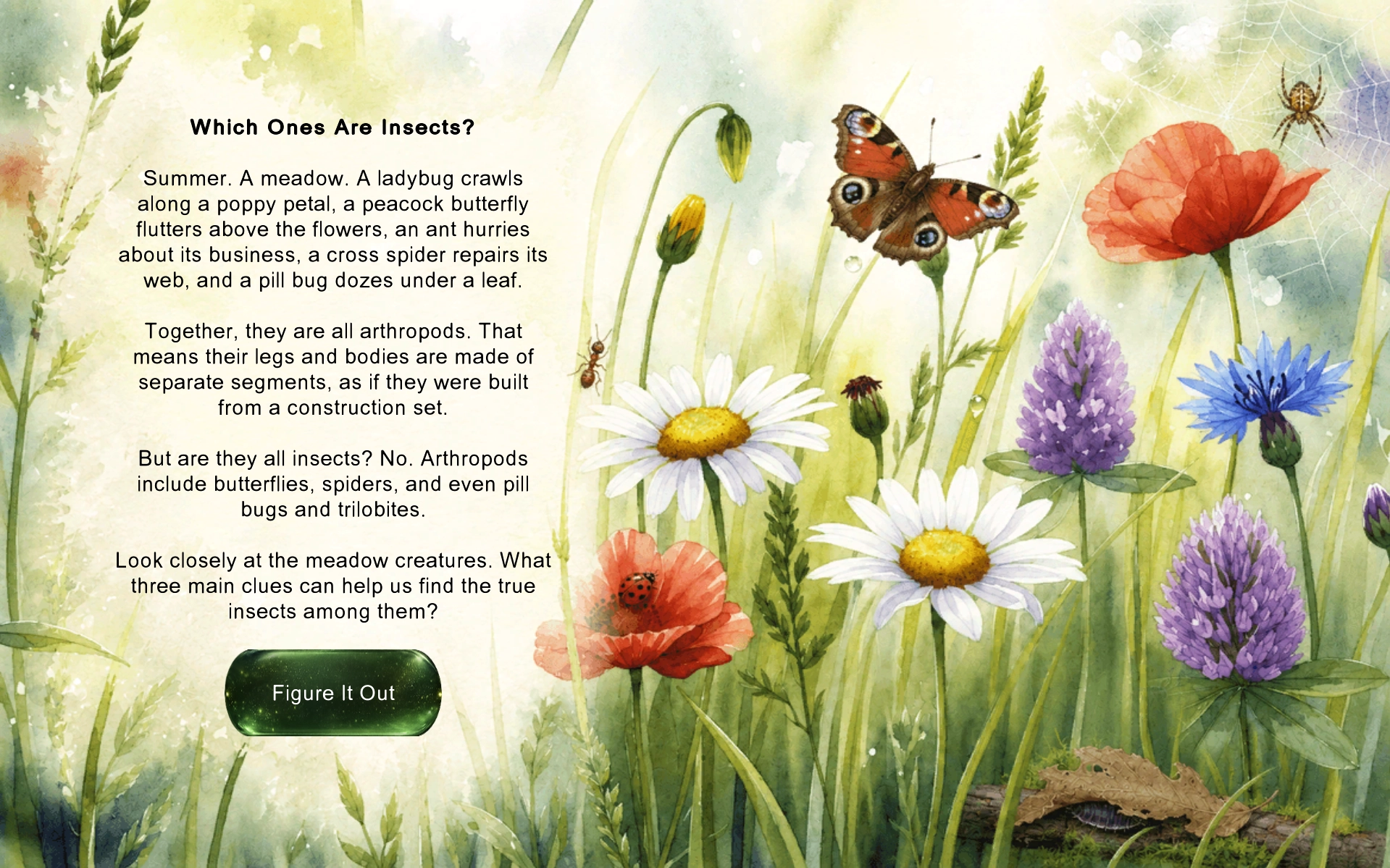
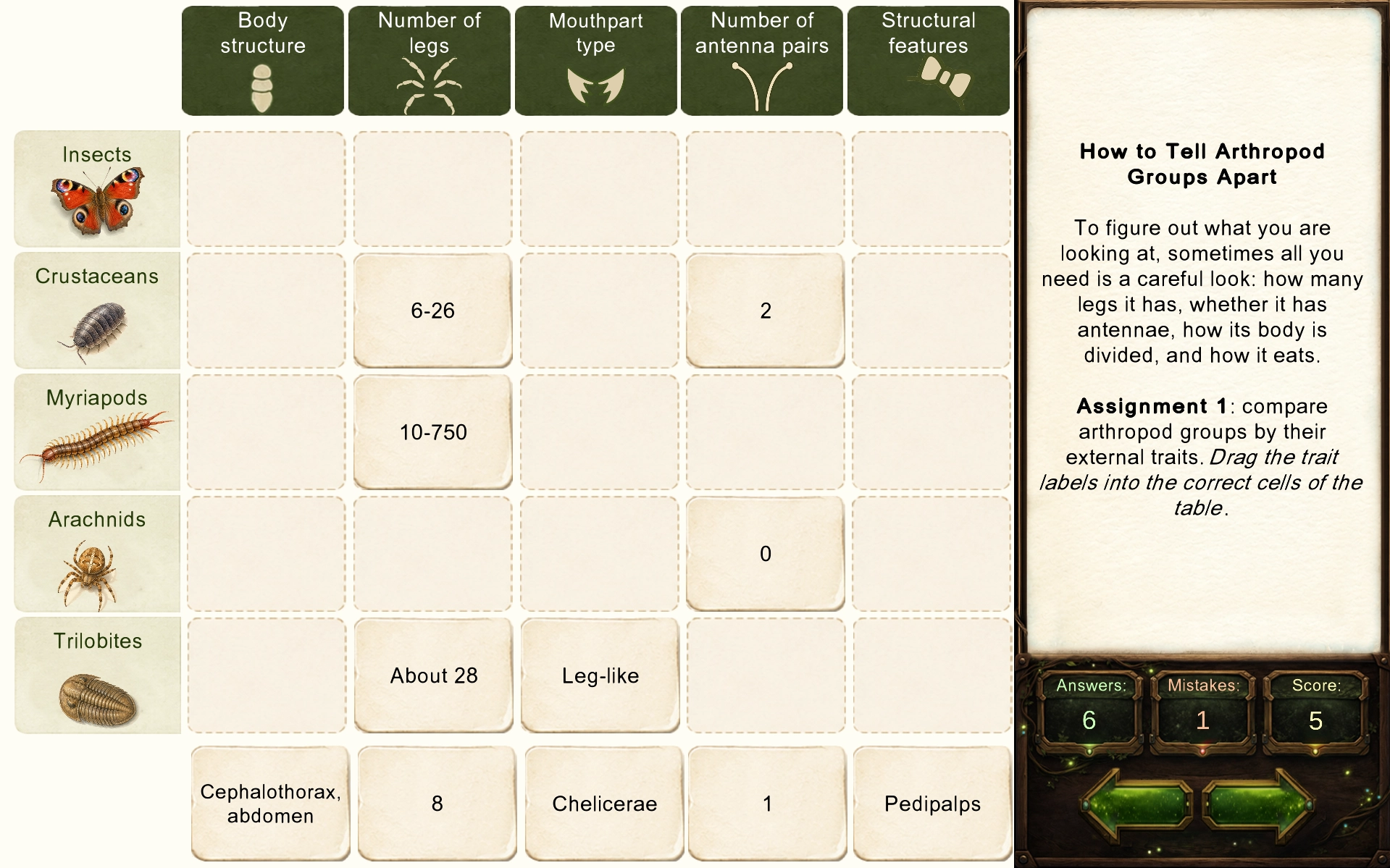
• Compare major arthropod groups: insects, arachnids, crustaceans, myriapods, and trilobites
• Classify arthropods by body structure, number of legs, antennae, mouthparts, and other distinguishing features
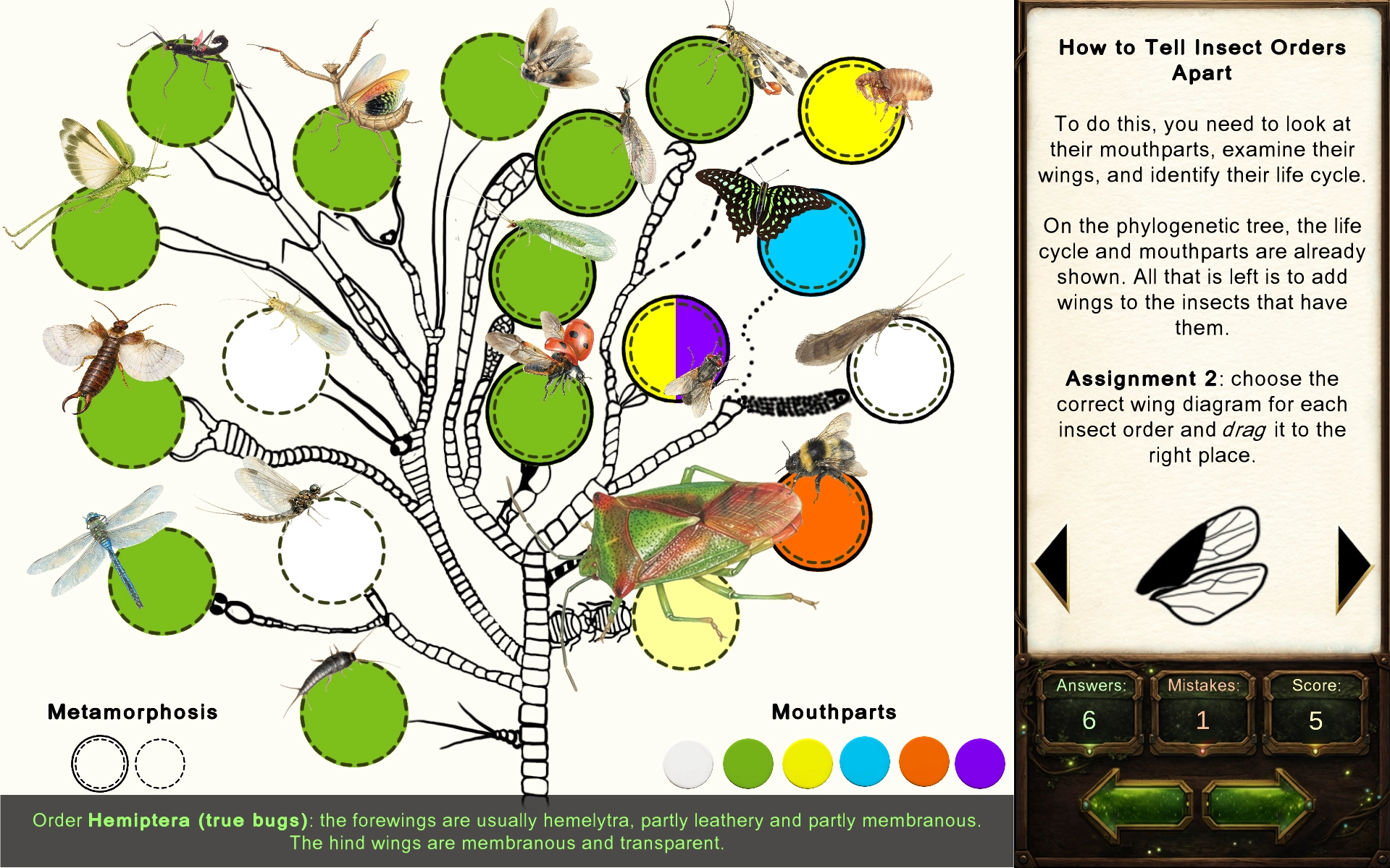
• Build an insect phylogenetic tree by matching insect groups to their characteristics
• Compare insect mouthparts and relate their structure to different feeding strategies
• Investigate insect life cycles, including complete and incomplete metamorphosis
• Classify insects into orders using visual clues, mouthparts, wing structure, and life cycle patterns
• Tackle tricky true-or-false questions about aphids, centipedes, earwigs, and bird-eating spiders
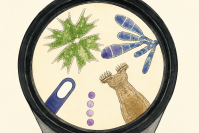
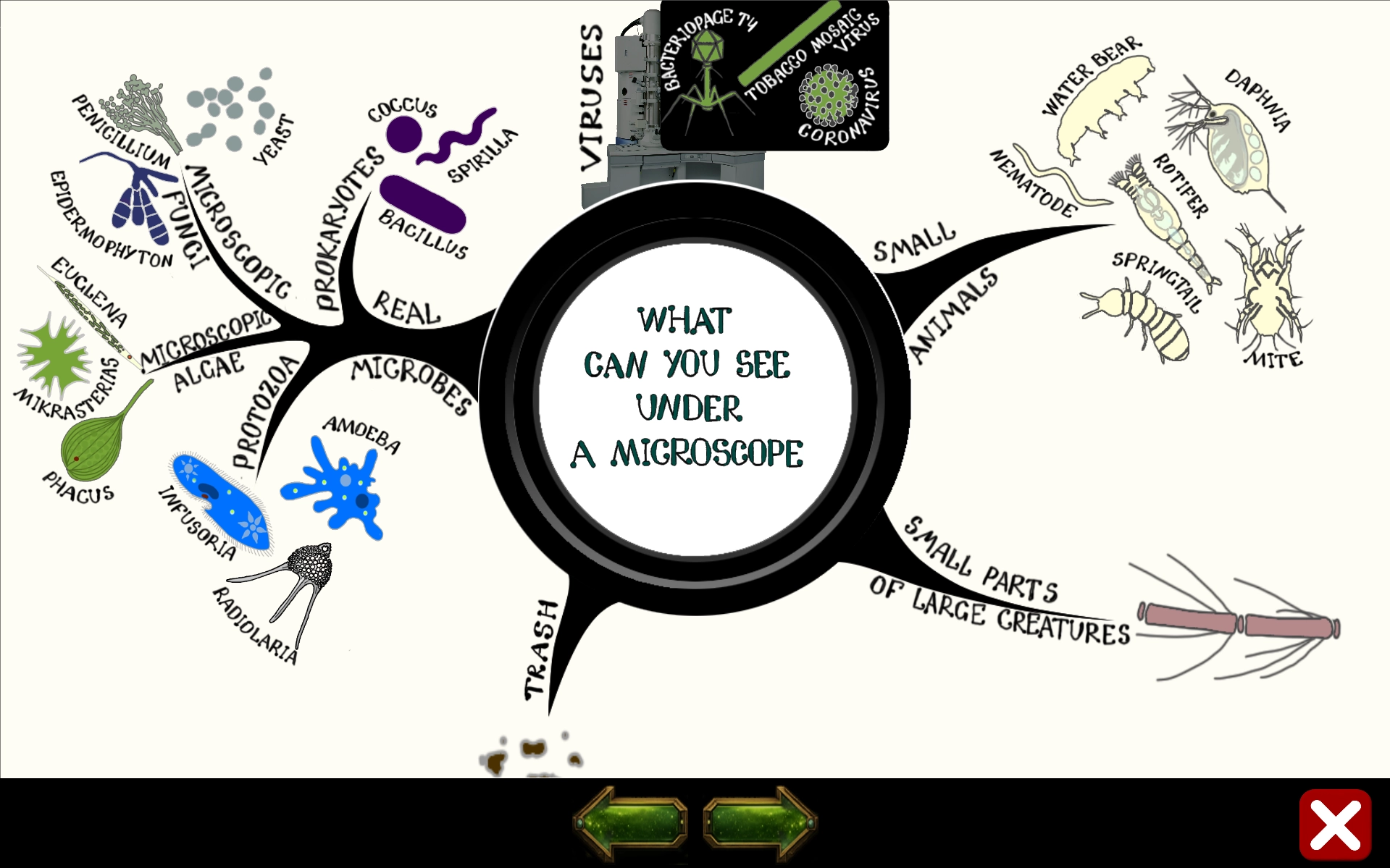
• Explore what microorganisms are and why they cannot be seen without magnification
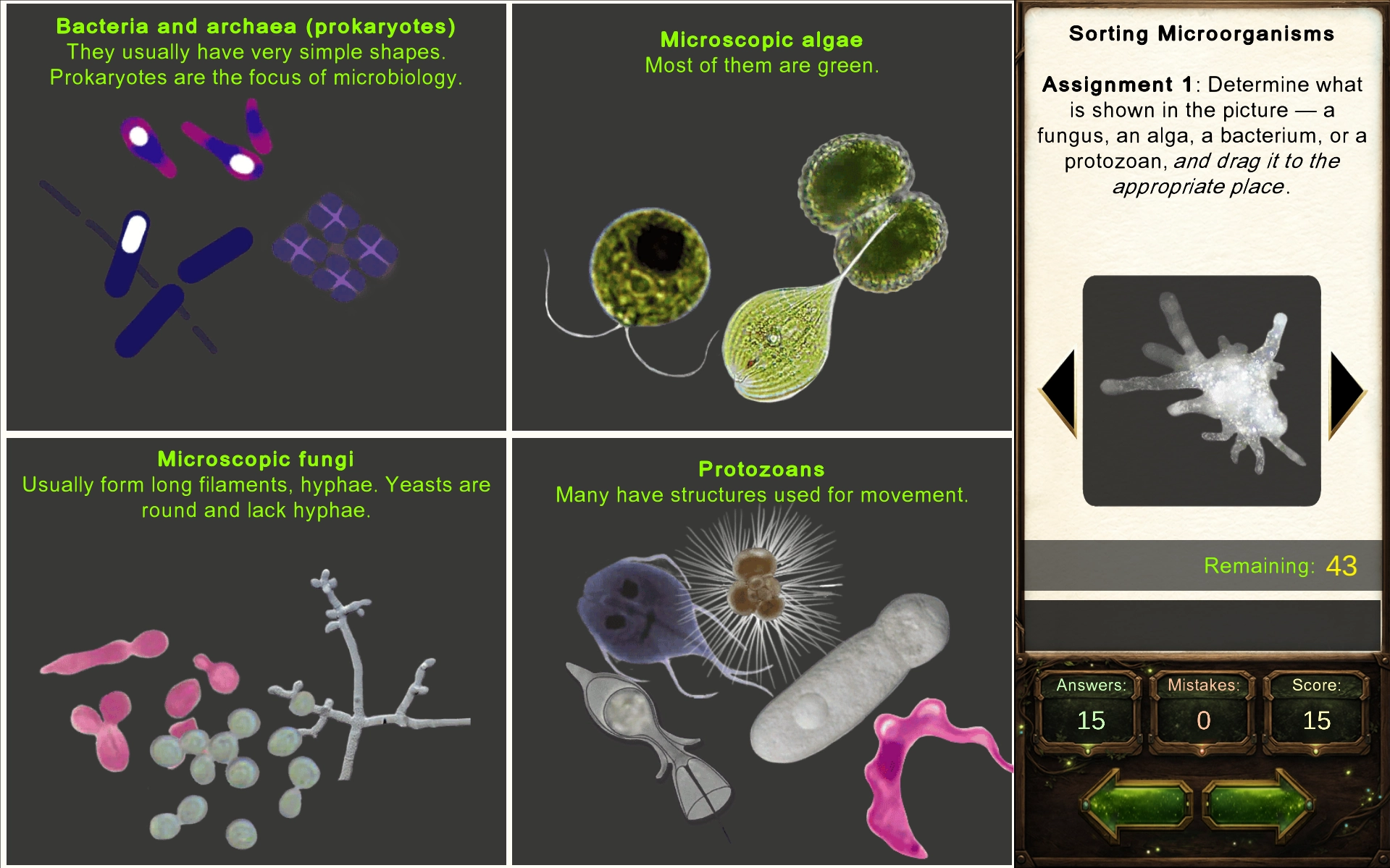
• Learn how scientists classify microorganisms into major groups
• Classify microorganisms as protozoa, microscopic algae, fungi, or bacteria based on their key characteristics
• Identify environments where microorganisms are most likely to be found
• Investigate everyday surroundings for evidence of microbial life
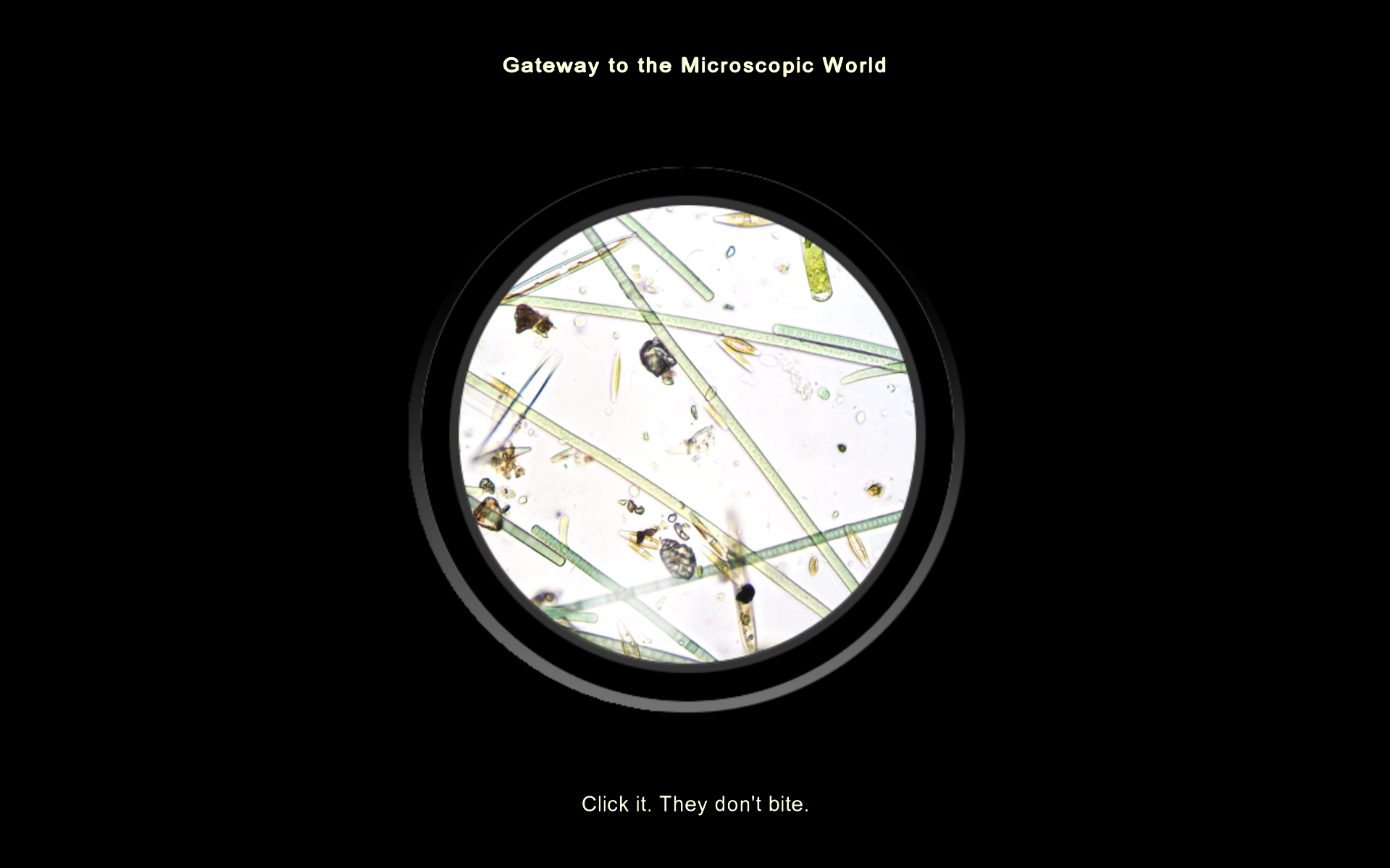
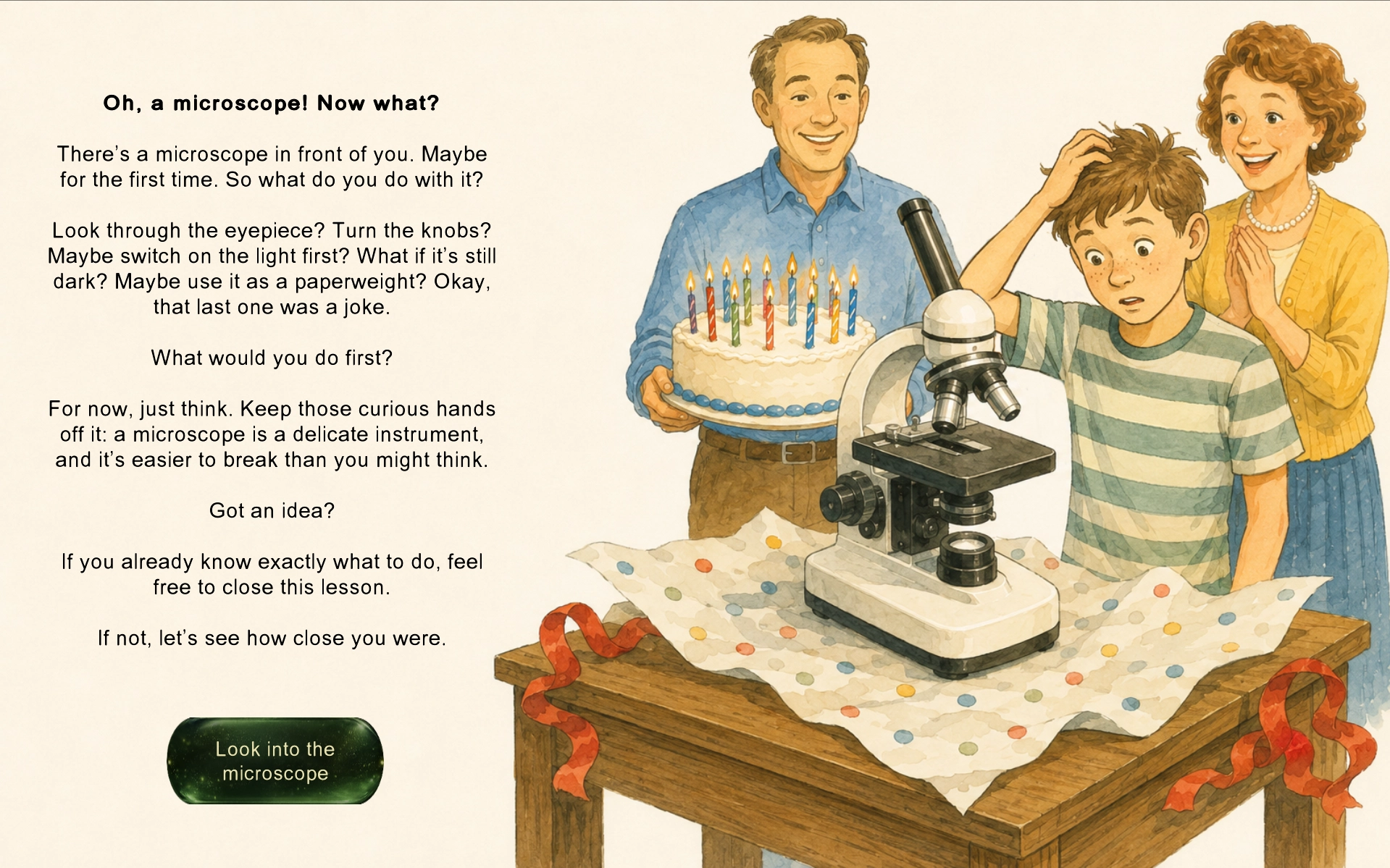
How to Use a Light Microscope
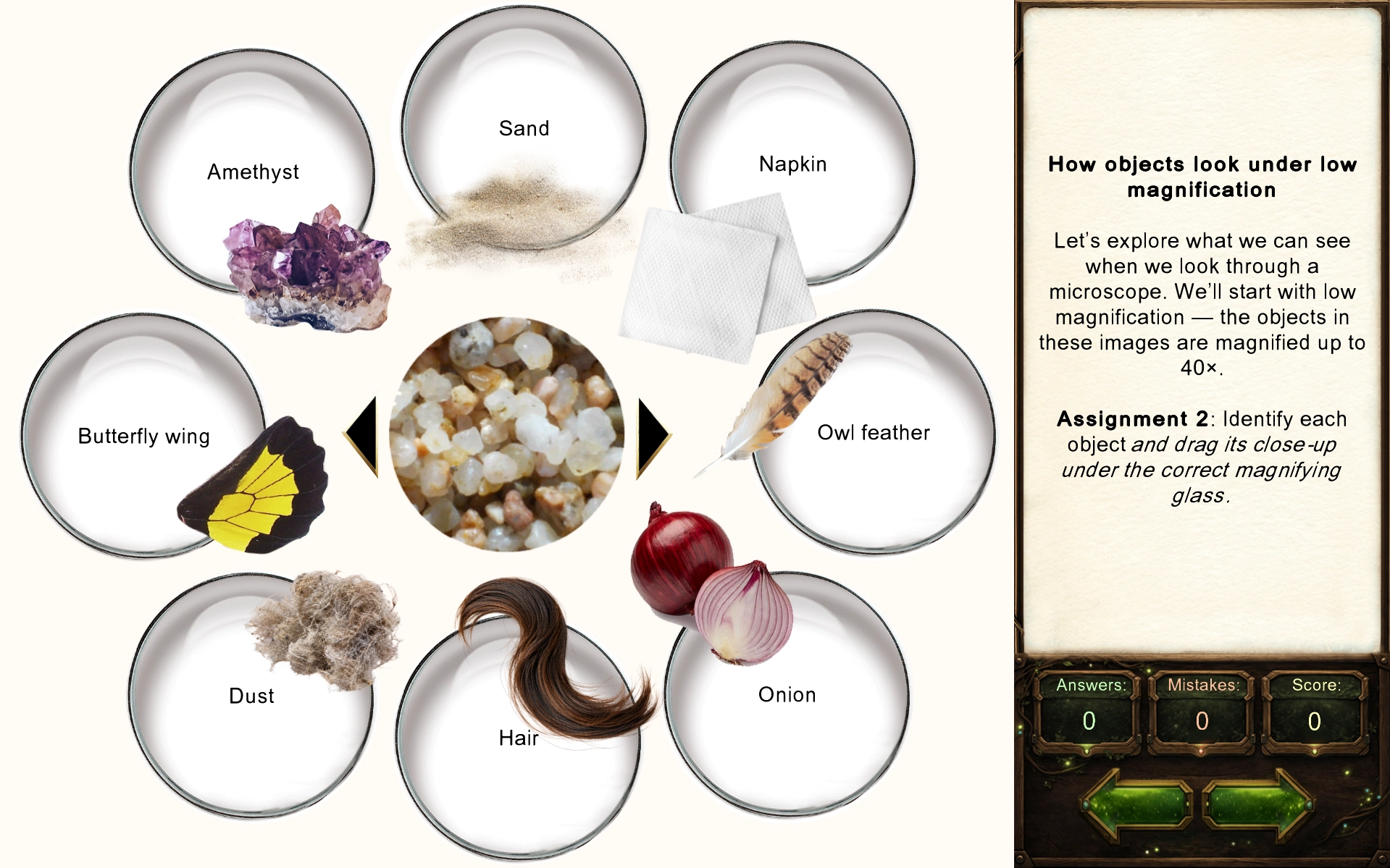
• Examine familiar objects, including butterfly wings, sand, onion layers, and hair, under a microscope
• Identify familiar objects from extreme close-up photographs
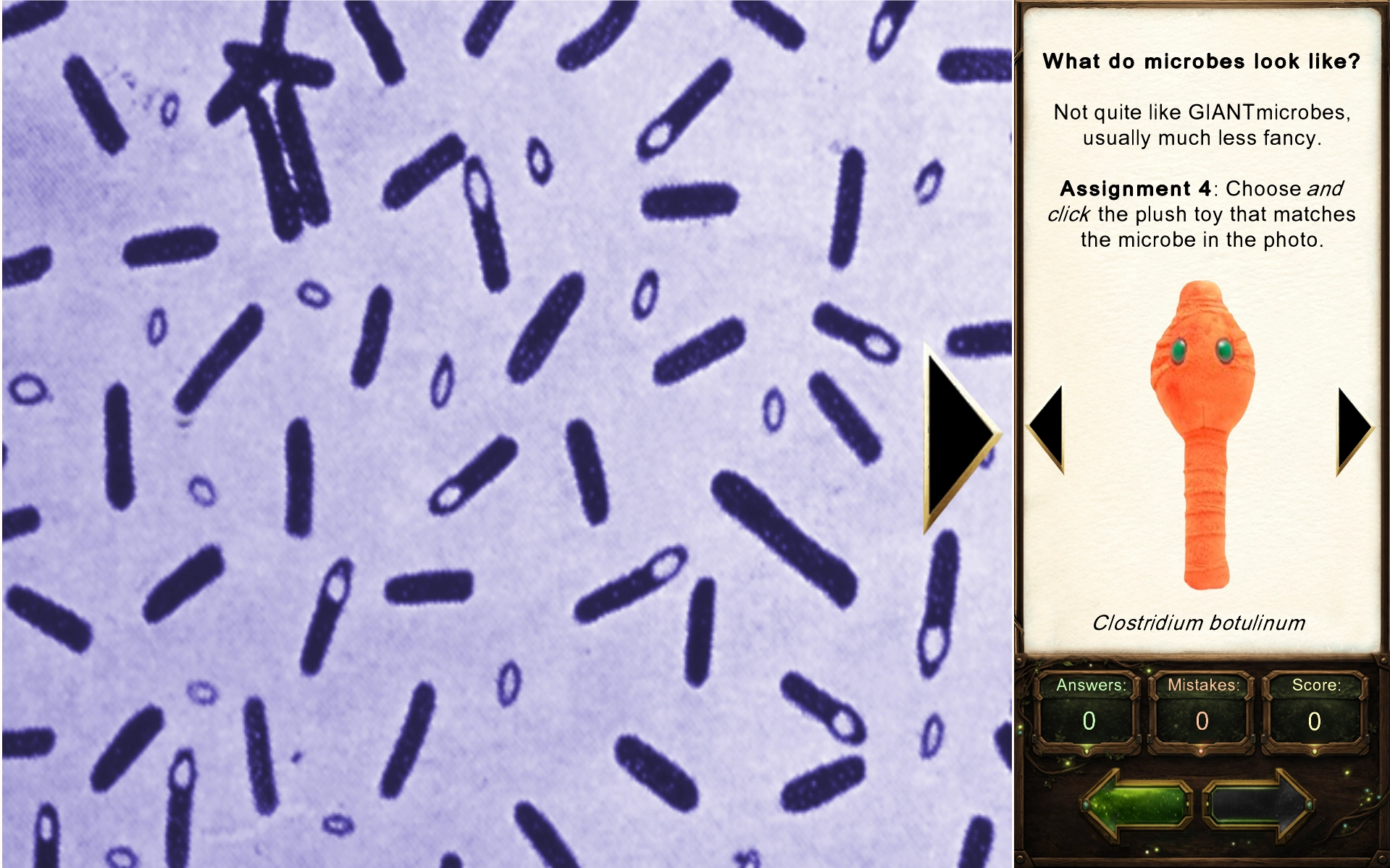
• Use plush microbe toys to recognize microorganisms commonly observed under a microscope
- Compare frost crystal patterns with bacterial colony shapes and explain why similar branching forms can appear
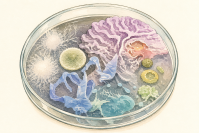
- Count how many different microorganism colonies are visible on a Petri dish
- Drag and drop labels to identify pigments responsible for different colony colors
- Decide whether each microscopic image shows a bacterium or a mold
- Place thermophilic bacteria into the correct temperature zones of a hot spring
- Identify elements in a natural landscape whose formation does not depend on microorganisms
- Review laboratory tools and outline how bacterial growth could be used to create simple patterns
- Examine microscopic skeletal structures and determine which organism each structure belongs to
-
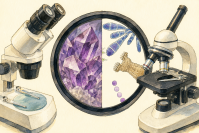
Explore the differences between a magnifying glass, a stereomicroscope, a compound microscope, SEM, TEM, and STM
-
Identify which microscope was used to produce a given image
-
Match magnifying tools to their appearance, characteristics, and typical use cases
-
Analyze micrographs and determine what structures are shown
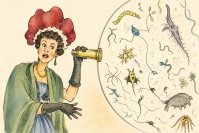
- Observe and identify objects as they might have appeared through the first microscopes.
- Map the key European countries connected to pioneering microscope and microbe discoveries
- Build a simple DIY digital microscope using a smartphone, tape, and a silica gel bead.
- Reflect on the evolving understanding of microbes from the 17th to the 19th centuries.
- Identify which creatures were once believed to appear “spontaneously” from mud, meat, or rags
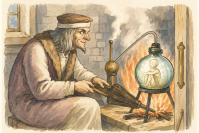
- Analyze Paracelsus’s “homunculus” recipe and spot how he avoided blame when it didn’t work
- Reconstruct Redi’s classic experiment to refute spontaneous generation using meat and jars
- Understand why bacteria don’t appear in Pasteur’s swan-neck flasks
- Reflect on what spontaneous generation really means — and what it doesn’t
-
Explore the inventions of the scientific revolution to understand the world where Pasteur made his discoveries
-
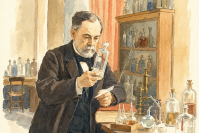
Examine the stories behind breakthroughs such as pasteurization, vaccines, and germ theory
-
Integrate Pasteur’s contributions among other scientific breakthroughs
- Identify common oral bacteria based on shape and Gram stain using interactive classification tasks
- Watch a step-by-step animation showing how a freshly cleaned tooth is colonized over time, and which microbes arrive first
- Complete a sequencing task to arrange bacterial groups in the order they colonize the tooth after brushing
- Explore the role of streptococci, lactobacilli, Veillonella, and Candida in dental plaque and oral health
- Examine live samples: students collect their own dental plaque, prepare a smear, stain it using the Gram method, and observe it under a microscope
- Discover who first saw gut bacteria and how scientists like Mechnikov, Pavlov, and Kollath shaped our understanding of microbial health
- Explore which microorganisms can (and cannot) live in the digestive system, and how their roles vary from helpful to harmful
- Examine bacteria typical of the human gut, identifying their shape and Gram stain type through visual clues
- Reflect on a thought-provoking question: Is life with microbes better than life without them?
- • Sort different algae into major groups
- • Explore how cyanobacteria are sometimes included among “algae” as photosynthetic prokaryotes
- • Place algae into their diverse habitats—from rivers, lakes, and oceans to sloth fur, sea anemone tentacles, and even mountain snow
- • Practice identifying algae with a teaching key based on real specimens used in lab work
- Watch an animated timeline of major discoveries that led to cell theory
- Match cell structures with visual associations to make their functions easier to remember
- Examine real microscope images and distinguish between plant and animal cells
- Identify unicellular and multicellular organisms from microscope images
- Explore colonial organisms as the fascinating in-between between unicellular and multicellular life
-
Sort Earth’s water reservoirs (oceans, rivers, glaciers, etc.) and discover what percentage of water each holds
-
Identify how much water is stored in everyday objects—from juicy fruits to dry items—with an interactive color-coding task
-
Reflect on water conservation: could oceans ever drain through a leaky faucet?
-
Select natural forces to “set the water cycle in motion” and watch it unfold in an animated model
-
Name each stage of the water cycle by typing answers into labeled fields
-
Discuss and imagine the boundaries of the water cycle—how deep underground and how far into space water molecules can travel
-
Click to identify factors that influence the water cycle (half are correct—can they spot them?)
-
Try fun, simple water experiments: sink or float tests, holding water in an upside-down glass, and more
Activities:
- Evaluate stone samples and exclude those unsuitable for mineral identification
- Identify stones and minerals using physical properties such as hardness and luster
- Apply concepts of transparency, cleavage, streak color, and optical effects
- Practice scientific decision-making with structured identification keys
- Explore where minerals form and how they can be found in nature
Activities:
- Prioritize actions for survival in a deserted island scenario
- Plan and start a fire
- Find and procure safe water
- Build a shelter to protect themselves
- Locate and gather food
- Maintain a positive mindset under stress
- Create and send signals to rescuers
- Identify the steppe among different world landscapes
- Choose appropriate clothing for traveling across a windy grassland biome
- Decide how to move across the steppe without exhausting themselves
- Plan how to manage limited drinking water during a long journey
- Analyze environmental clues that may reveal hidden water sources
- Determine directions using the sun, stars, wind, and plant clues
- Evaluate the danger level of different steppe animals
- Decide how to safely check burrows and grass for venomous creatures
- Choose the safest way to escape a fast-moving grassland wildfire
- Determine what to do during a sudden steppe thunderstorm
- Identify edible plants and food sources that could help travelers survive
- Carefully observe the landscape to detect an ancient burial mound
- Distinguish a Scythian kurgan from a natural hill
- Examine artifacts discovered inside a Scythian burial mound
-
Examine six historical or conceptual observations drawn from real scientific discoveries
-
Step into the role of a scientist and propose logical explanations for each observation
-
Make connections between everyday phenomena and significant scientific ideas
-
Reflect on the role of creativity, questioning, and pattern recognition in science